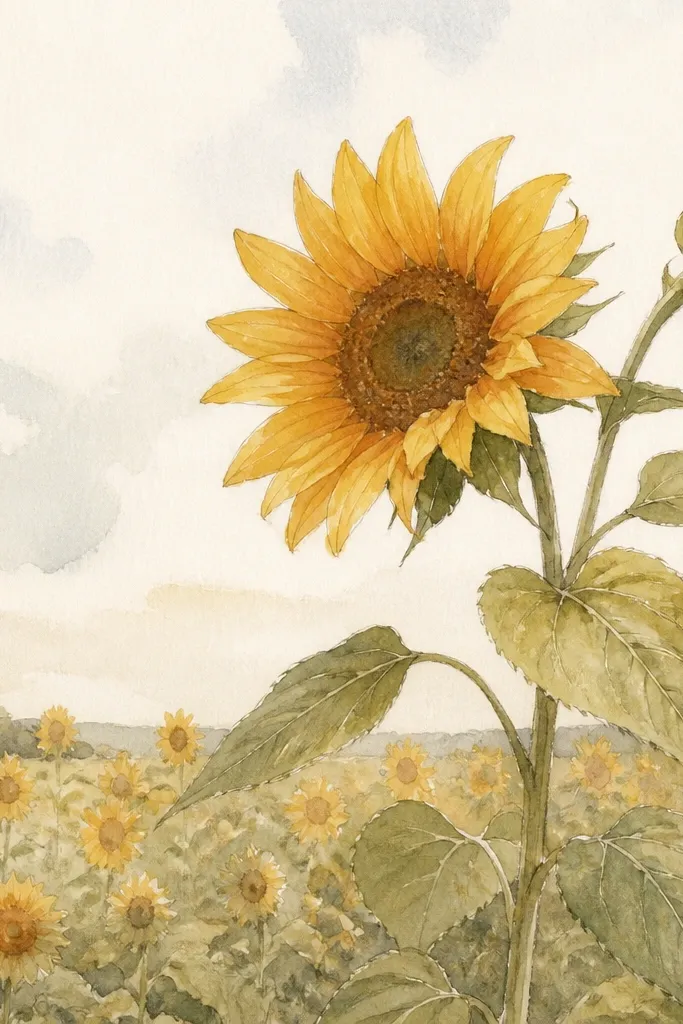
1. Worn Denim Tote Sunflower Field
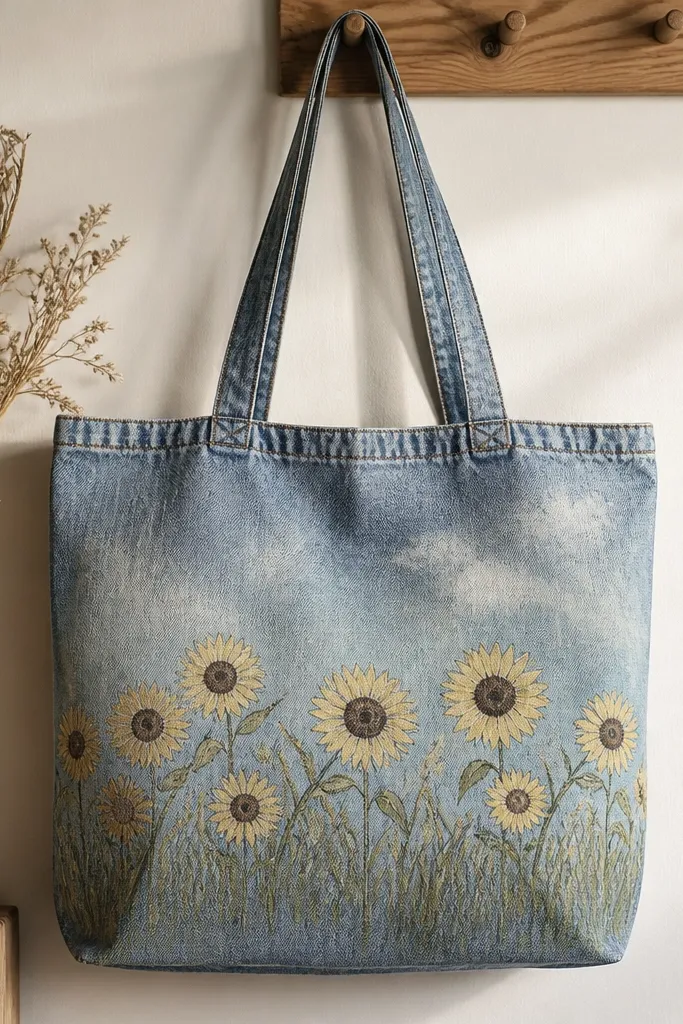
This look works because denim already has texture, so your grass strokes land with extra realism. I use sunflower yellows that lean buttery (not neon) and seed heads in a warm dark brown, then I add a thin gray-green haze behind the far flowers so the scene has air. On people with lighter skin tones, the warm yellows brighten the whole outfit when you carry it; on deeper skin tones, the olive grass reads crisp and grounded. It's best for casual days, farmers market runs, or gifting because it looks handmade even from a distance. The styling principle is contrast control: keep distant flowers lighter and softer than the foreground grass.
Start by sketching a horizon line about 4 inches from the bottom edge of the tote. Paint or wash the sky first with diluted cream-yellow and a whisper of light blue, then dry it with a hair dryer on low for 30 seconds. Next, block in distant grass using a stiff brush with watered-down olive, then add mid-ground sunflowers - smaller heads, fewer seed marks, and petals that overlap the grass. Finish with foreground grass: load your brush with thicker paint and pull short upward strokes across the bottom 2 inches, then outline a few petals with a thin brown line for definition.
Good to knowSeal the whole tote with a fabric medium mixed 1:1 with matte acrylic medium so your grass strokes don't crack after washing.
Common mistakeDon't use thick paint for the sky - it makes the horizon look like a sticker.
2. Tea-Stained Paper Sunflower Field Horizon
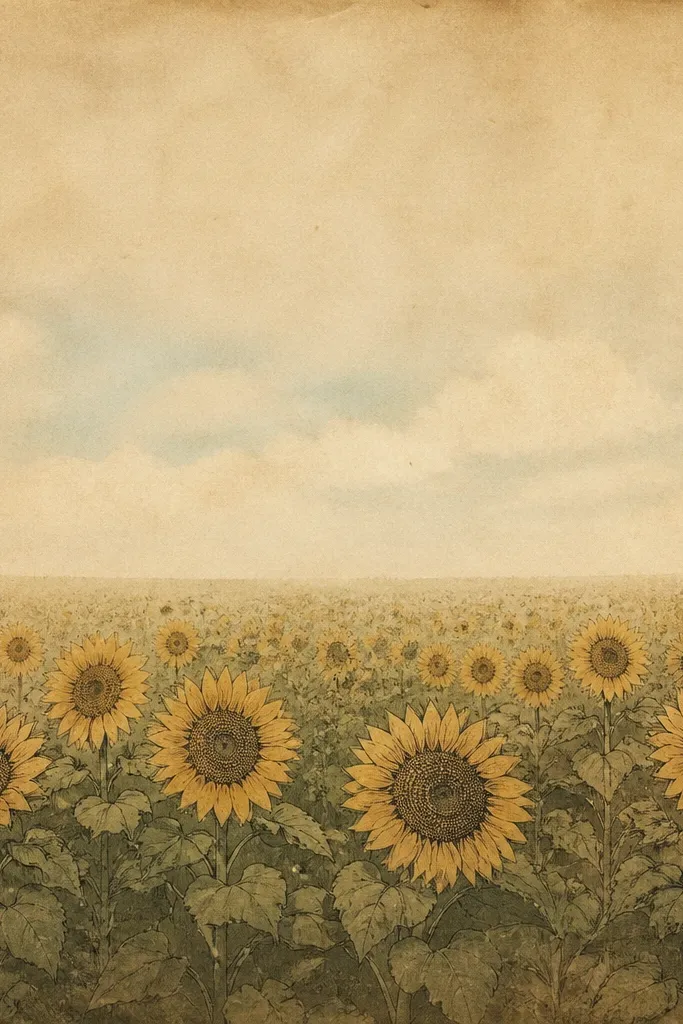
Tea-stained paper gives you instant warmth, so the sunflower yellows look like late afternoon light. I like this aesthetic when I want a calmer, nostalgic vibe without heavy color. The seed heads look best with a fine pen because the spiral texture shows through the stain. This flatters anyone's taste in cozy art - it's especially good for warm undertones in clothing because the whole piece looks like it belongs together. The principle is value layering: your foreground grasses stay darker, and your distant band turns almost smoky.
Start by staining your paper with black tea (strong brew) using a sponge, then blot until you get a light tan that's even. When it's dry, lightly pencil your horizon at 1/3 from the bottom. Wash distant grass first with very diluted olive-gray, then add sunflower silhouettes in the mid-ground - keep their outlines soft. Finish with ink: draw seed spirals on the foreground heads, then add a few tall grass strokes in darker green that cross the bottom edge.
Good to knowUse a gel pen for seed spirals on tea paper - it glides without tearing the fibers.
Common mistakeSkip bright white highlights; on tea paper they look harsh and break the dreamy mood.
3. Watercolor Wash + Ink Sunflower Field
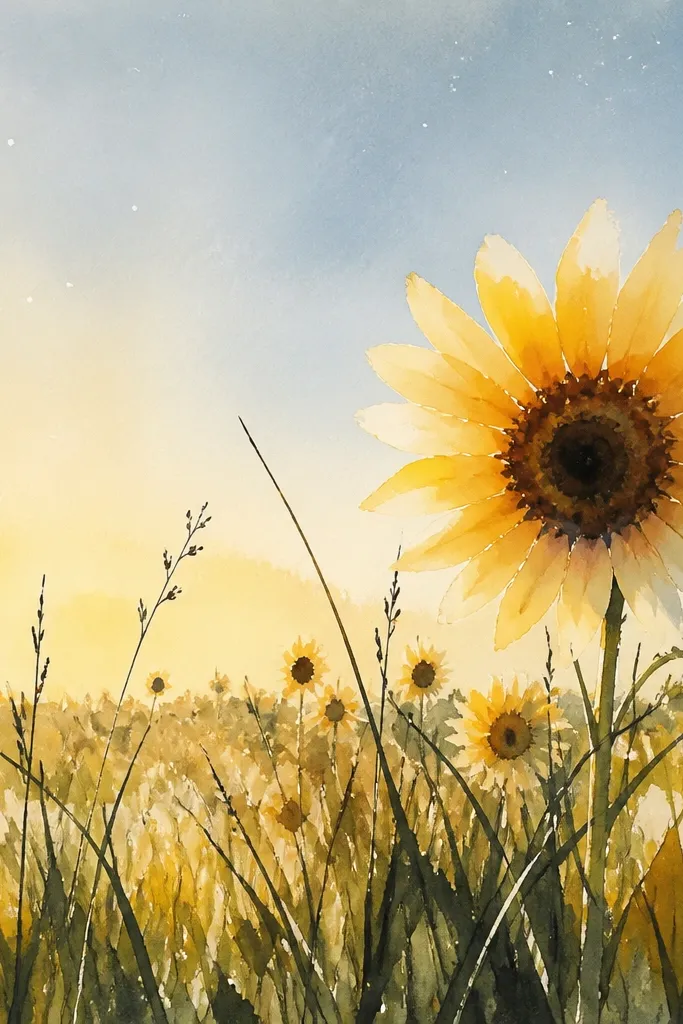
This is the aesthetic look I reach for when I want movement. Watercolor gives you the haze between flowers, while ink gives you crisp structure where the eye needs it. I use a limited palette: lemon yellow petals, burnt umber seed heads, and olive-gray for grass. It flatters people who like airy art because the scene feels light even when the foreground is busy. The styling principle is soft background + sharp foreground - your ink should be strongest at the bottom.
Start with a wet-on-dry sky wash: pale peach fading into very light blue, leaving paper white for glow. While it's still slightly damp, drop in a few tiny paint specks with a toothbrush for texture, then set aside to dry. Next, paint three grass bands: distant (light olive-gray), mid (medium olive), foreground (darker olive). Finally, add sunflowers: paint petals as loose teardrops around the seed circle, then ink the seed spiral only on the top 5 flowers closest to the viewer.
Good to knowBefore adding ink, wait until watercolor is fully dry so the lines stay crisp instead of bleeding.
Common mistakeDon't ink the entire field - it turns into a scratchy mess and kills the haze.
4. Sunflower Field on Old Picture Frame Mat
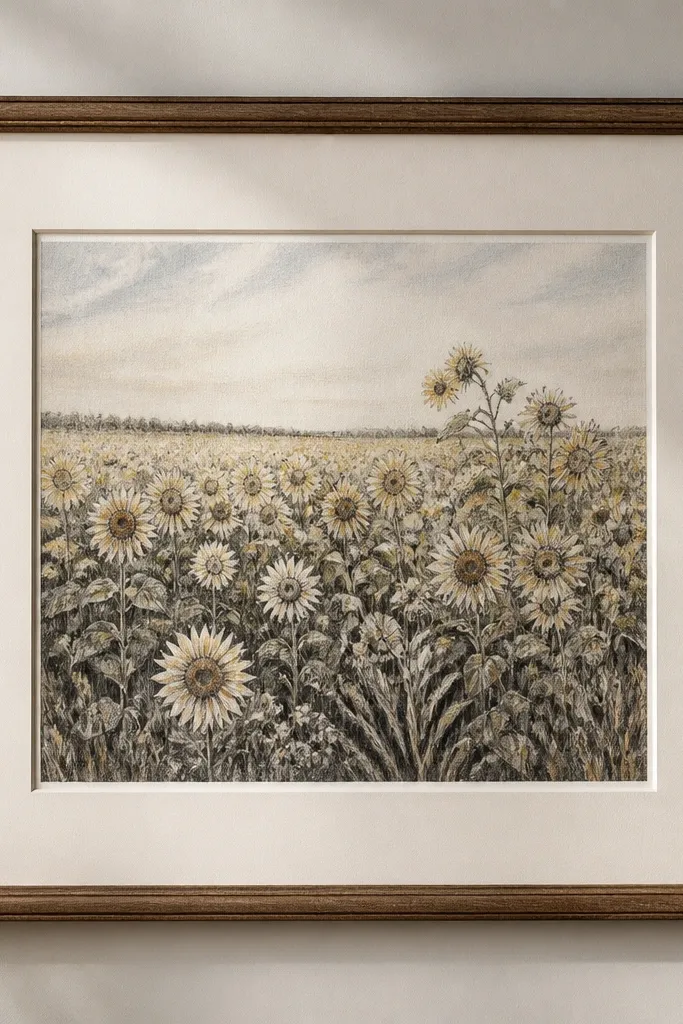
This look works because the mat board already sets a clean border, so your field feels like it belongs in a gallery. I draw the field slightly off-center so the sunflowers don't feel like they're filling a rectangle. The palette stays warm: gold yellow petals, chocolate seed centers, and layered greens that shift from sage to deep olive. It flatters most rooms because the colors read natural rather than neon. The principle is framing your composition: give the horizon room to breathe within the mat.
Start by tracing a rectangle border inside the mat so you have a safe margin for the field. Pencil in a horizon about 1/3 up, then lightly sketch 7 to 10 sunflower heads in the mid-ground with varying sizes. Paint a thin sky wash, then block in distant grass with a single diluted green. Add mid petals and seed heads next, then finish with foreground grass using short strokes that stop just above the bottom border so it looks intentional.
Good to knowUse a white gel pen to add 3 tiny petal highlights per sunflower - it makes the flowers look sunlit.
Common mistakeDon't crowd the top edge with tall blooms; it makes the horizon feel cramped.
5. Chalk Marker Sunflower Field on Canvas Tote
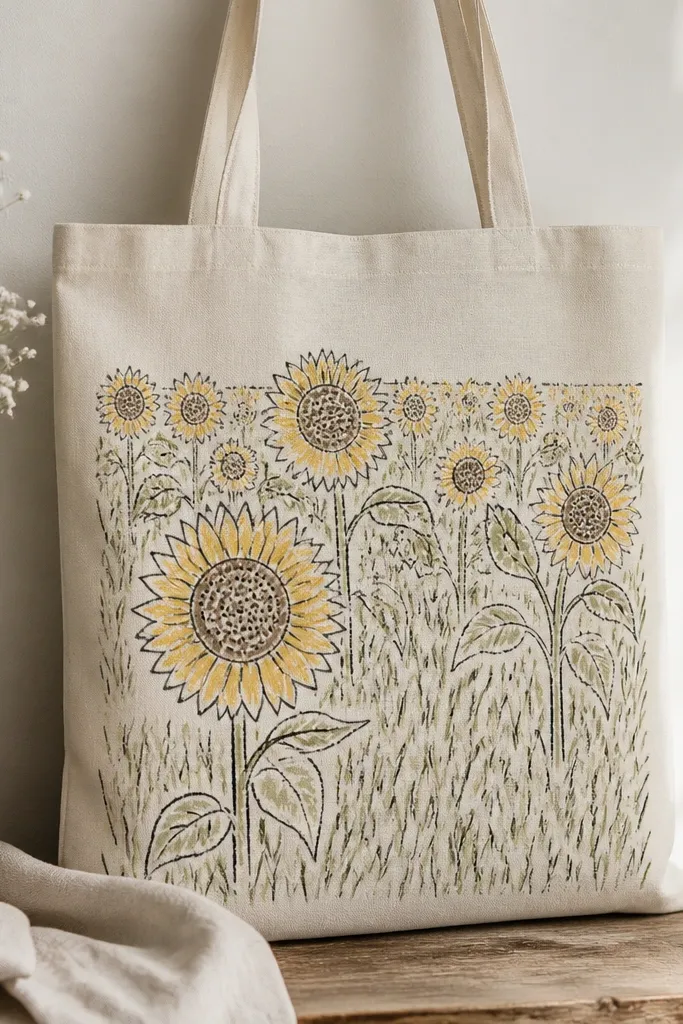
Chalk marker gives you that sketched, slightly imperfect charm that reads "hand-drawn" instantly. I like it for a quick upcycle because you can build the scene in thin passes without soaking fabric. The sunflower yellows look softer than paint, which makes the field feel dreamy rather than bold. It's flattering for outfits that already have strong color because the tote stays gentle and doesn't compete. The principle is line confidence: keep the chalk strokes consistent in direction so grass looks like it's growing.
Start by ironing the canvas tote so the marker lays flat, then sketch the horizon at 4 inches up from the bottom. Draw sunflowers first as circles for seed heads with a ring of 12 petals, then repeat at smaller sizes for distance. Shade petals lightly with yellow chalk, then dot the seed head with brown so it looks textured. Finish with grass: draw short angled strokes starting from the horizon and getting longer at the bottom, then add a few darker grass clumps in the foreground.
Good to knowLock it in with a fabric-safe clear sealer spray once everything is dry.
Common mistakeDon't press hard on the marker - deep grooves make the drawing look scratched and uneven.
6. Book Page Upcycle Sunflower Field Collage
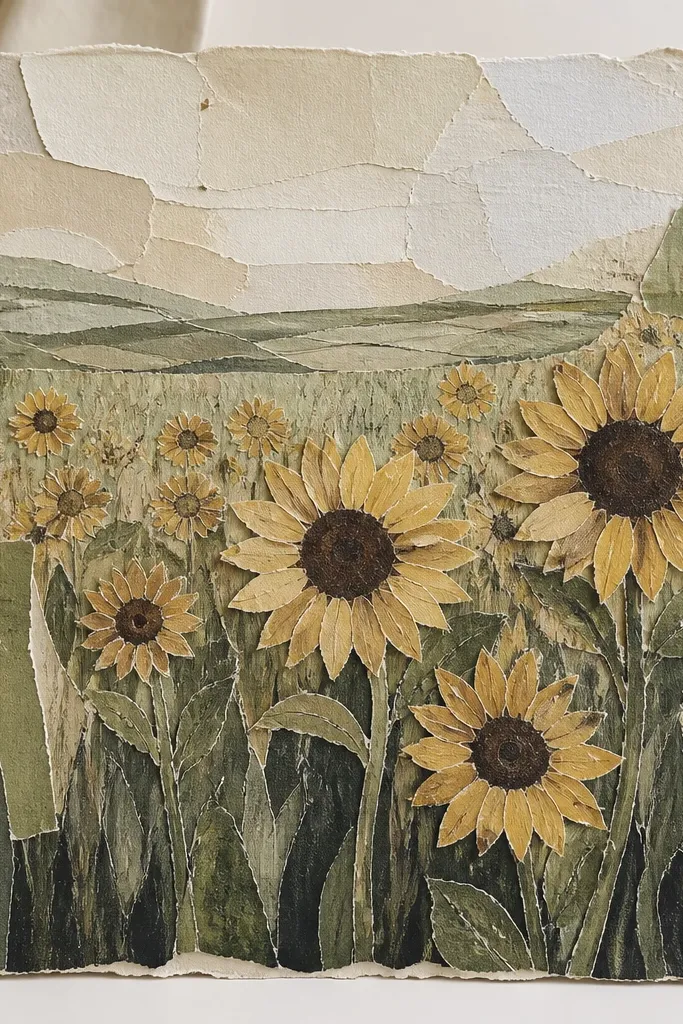
This is a sneaky way to make your sunflower field look layered without painting every single blade of grass. The torn book text adds grain, so your sky haze and grass smudges look more natural. I use watercolor washes over the glued pages, then draw seed spirals with a black pen so the flowers pop. It flatters rooms with neutral decor because the paper tones keep the palette grounded. The principle is using texture as depth: distant areas are lighter and more washed, while foreground is darker and more defined.
Start by tearing book pages into irregular strips and gluing them to a canvas panel or thick cardboard, overlapping so you get a soft collage surface. After the glue dries, lightly pencil your horizon at about 1/3 from the bottom. Wash the sky with diluted cream and a touch of light blue, then blend distant grass with a pale olive-gray. Place and paint sunflowers in the mid-ground, then draw foreground grass blades that cross over the collage seams for a stronger 3D feel.
Good to knowUse matte gel medium instead of glossy glue so the watercolor doesn't puddle.
Common mistakeDon't let the watercolor pool on torn edges; it bleeds the text and dulls the colors.
7. Sunflower Field Gesso Background + Acrylic Dry Brush
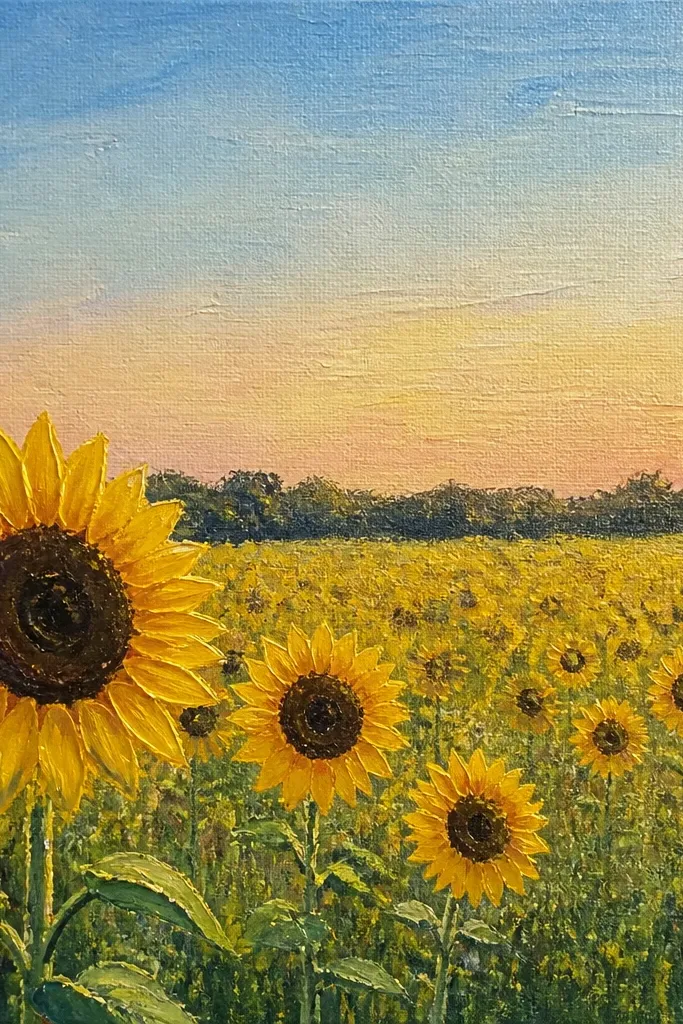
Gesso gives you grip, so acrylic dry brushing looks like real grass texture instead of flat strokes. I use this when I want the field to feel tactile, like you could reach out and touch the blades. The sunflower petals look best when you keep edges slightly rough from the dry brush. This aesthetic flatters mixed-media lovers and anyone who likes their art to show process. The principle is texture-first: build grass texture before you add crisp flower details.
Start by coating a small canvas panel with gesso and let it cure for at least 2 hours. Lightly pencil your horizon and outline a few sunflower heads in the mid-ground. Paint the sky with a thin wash, then dry-brush distant grass in light olive over the textured surface. For the mid and foreground, dry-brush darker olive and then add seed heads last with a small round brush, finishing with dry brushing tiny highlights on petals.
Good to knowLoad your brush with paint, then wipe most of it off on a paper towel before brushing - that's what creates the speckled grass.
Common mistakeDon't smooth over the gesso texture with thick paint; it kills the grass effect.
8. Sunflower Field Night Glow with Deep Navy Sky
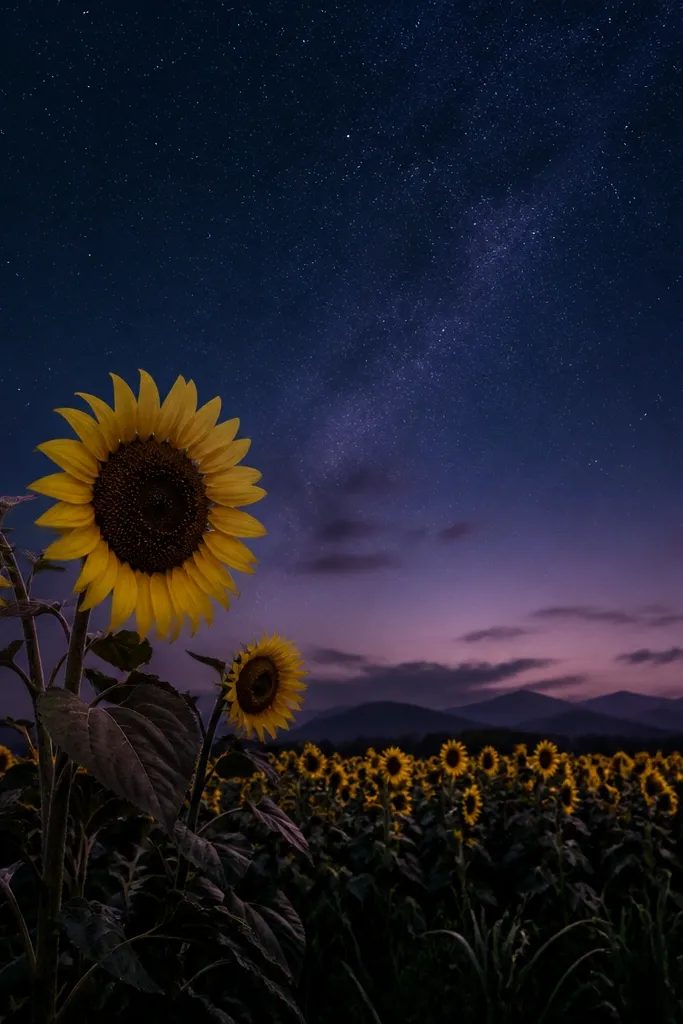
This is the "dreamy but dramatic" version of the sunflower field drawing aesthetic look. The deep navy sky makes the yellows feel like lanterns, especially when you add a faint purple mist above the horizon. I paint seed heads in near-black brown so they don't look muddy against the dark background. It's flattering for people who like moody decor - it looks great on dark walls or in black frames. The principle is color temperature: warm sunflowers against cool sky.
Start by painting the sky in deep navy, leaving the horizon area slightly lighter. Mix a very thin lavender wash and sweep it just above the horizon, then blend softly with a damp brush. Paint distant grass with diluted charcoal-green, then add mid sunflowers as smaller, slightly blurred shapes. Finish with foreground grass in darker charcoal and add tiny yellow highlights to petal edges, plus a few pale green strokes to suggest moonlight on blades.
Good to knowUse a white pencil or gel pen to add 5-7 tiny "glow points" around the brightest foreground petals.
Common mistakeDon't use bright white for the entire sky; it makes it look like a cheap poster.
9. Pressed Flower Look with Sunflower Petal Stencils
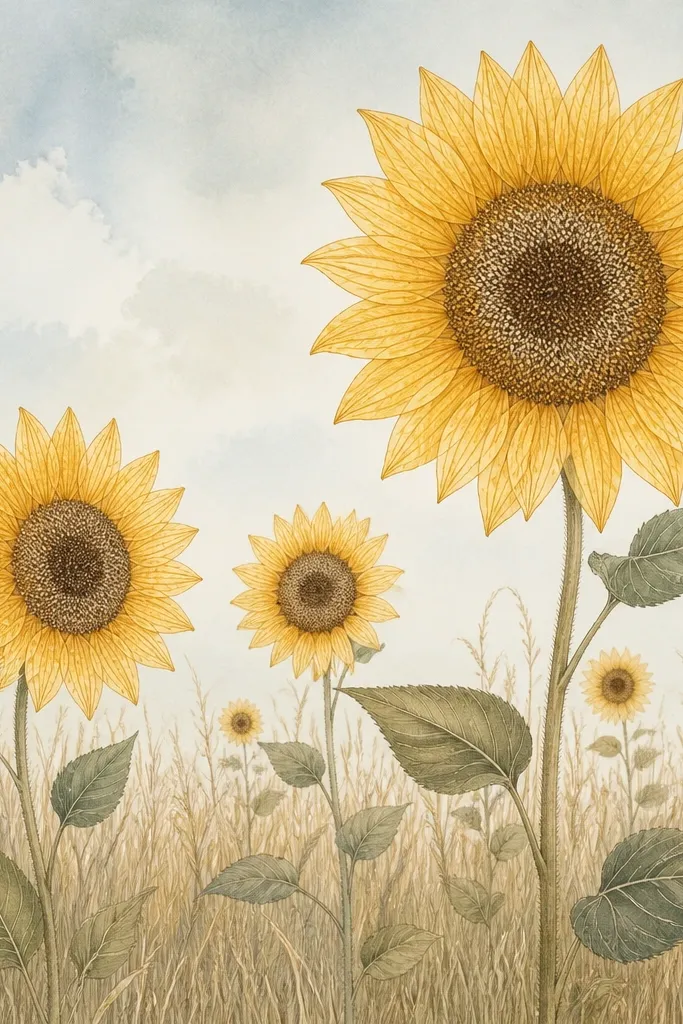
This one looks fancy because it borrows texture from real petals without needing perfect realism. You get that pressed, botanical feel by using petal stencils or actual dried petals as a mask. I keep the seed heads stippled in brown so they look tactile, while the petals stay light yellow with subtle shadow. It flatters anyone who likes delicate, science-meets-cottage vibes. The principle is controlled texture: add only a few patterned areas so it stays dreamy.
Start by making a stencil from a dried sunflower petal - lay it flat and trace around it, then cut carefully. Sketch your horizon and draw sunflower centers as circles. Apply light yellow paint using the petal stencil over the mid-ground petals, leaving some paper showing for a soft glow. Finish by stippling seed heads with a small brush or dotting tool, then add grass with thin line strokes that get denser near the bottom.
Good to knowSpray the stencil with a light mist of water before painting so edges stay crisp and don't smear.
Common mistakeDon't cover every petal with texture - repeating the pattern everywhere makes it look stamped.
10. Sunflower Field with Paper Cutout Leaves
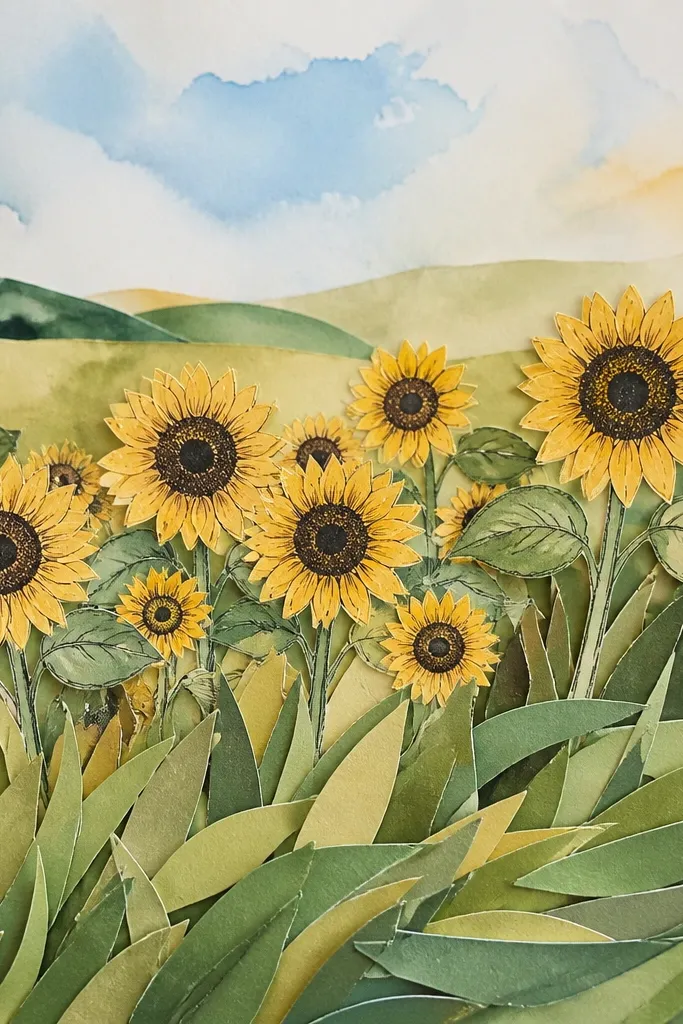
Paper cutouts add real depth because they cast shadows, even if you don't paint shadows. I use this when I want the foreground to feel like it's in front of the sky, not just drawn on it. The palette is simple: cream background paper, muted olive cutouts, and yellow petal paint. It flatters minimalist interiors because the shape work looks clean and intentional. The principle is layering physical elements: cut grass in strips, then lock it under the drawn flowers.
Start by cutting thin strips of olive paper for grass, varying lengths from 1 inch to 3 inches so it naturally curves. Glue the paper grass first, placing the tallest pieces at the bottom and shorter pieces near the horizon. Paint the sky and distant grass behind the cutouts with diluted watercolor. After it dries, draw sunflower heads on top and add seed spirals, then add a few hand-painted petal shadows that touch the paper grass edge.
Good to knowTrim the paper edges with a craft knife for sharper grass silhouettes.
Common mistakeDon't glue paper grass too evenly - uneven heights is what makes it look alive.
11. Sunflower Field with Lace Border + Corner Clusters
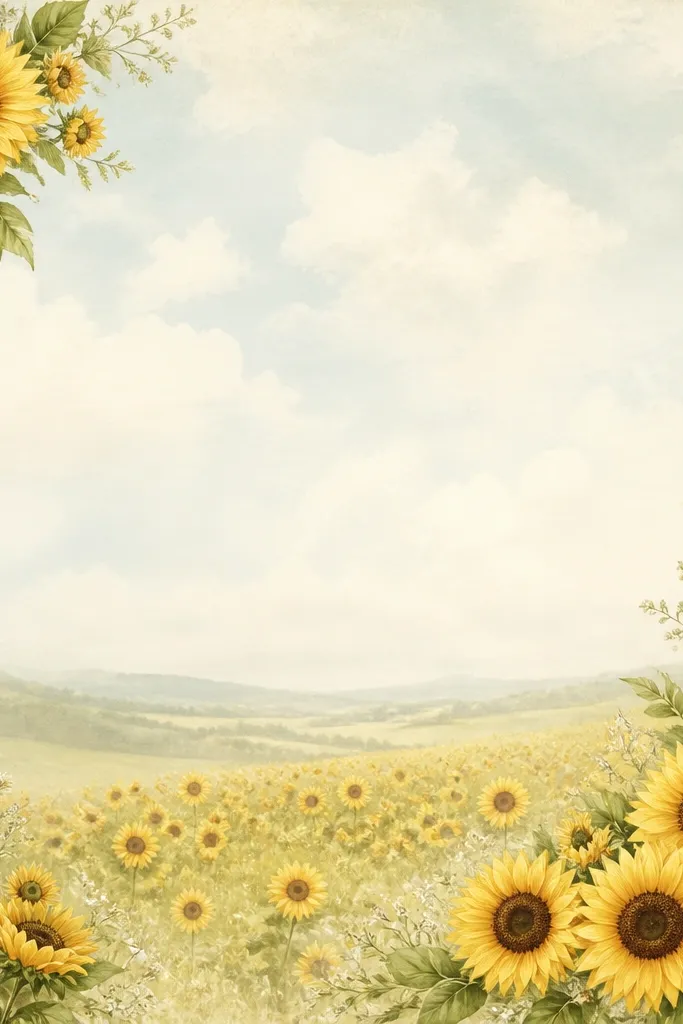
This look frames the field so your eyes land on the flowers first, then travel across the horizon. I use lace because it creates a delicate "negative space" effect that feels old-fashioned, not cluttered. The sunflower palette stays gentle: pale yellow petals, warm brown centers, and thin green grass lines. It's flattering for a more feminine aesthetic and works well on greeting cards or small wall art. The principle is border control: lace stays at the edges while the field fills the center with depth.
Start by placing a lace strip on your paper or fabric and lightly brushing over it with diluted paint to transfer the pattern. Let that dry, then sketch your horizon in the center. Paint the distant grass wash first, then add sunflowers clustered on the corners as larger blooms with a few smaller ones fading toward the middle. Finish with thin grass lines that start near the horizon and grow denser at the bottom, keeping the lace areas mostly clear so the border stays crisp.
Good to knowUse a makeup sponge for the lace paint transfer so you avoid heavy paint blobs.
Common mistakeDon't paint over the lace pattern too thickly or the detail disappears.
12. Sunflower Field Drawing on Upcycled Window Shade Fabric
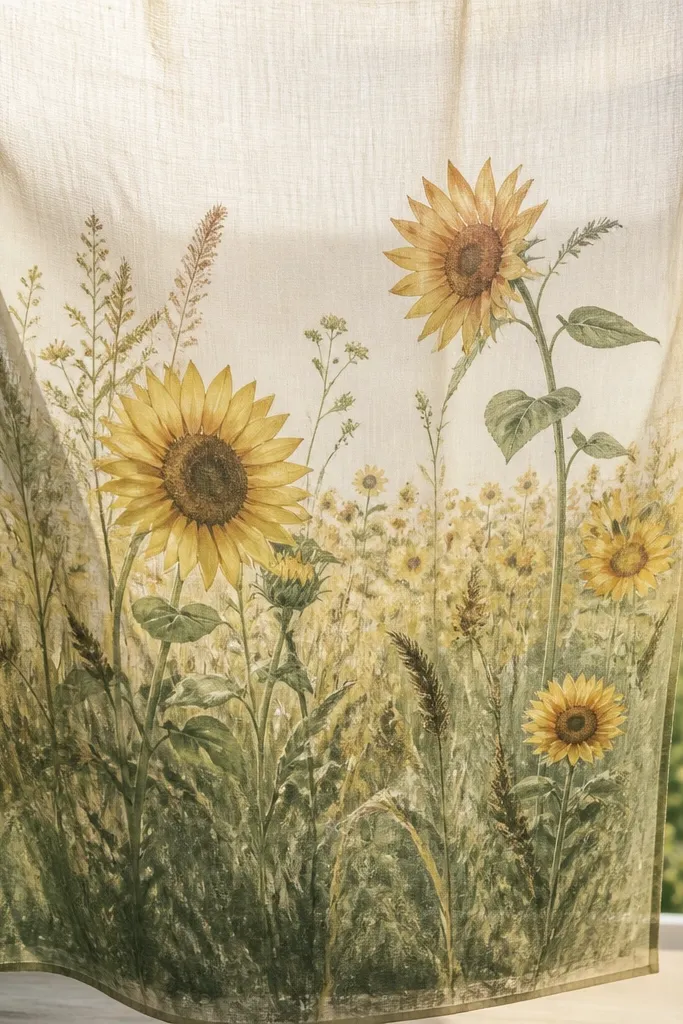
On sheer fabric, the light does half the work for you. That's why this sunflower field drawing aesthetic look feels airy - the sky wash glows when sunlight hits it. I use translucent paint or diluted acrylic and keep seed details darker so they still read through the fabric. It flatters bright rooms because the artwork looks like it's part of the window light. The principle is transparency layering: you're painting for readability through light, not opacity.
Start by stretching your fabric tight on a frame or hoop so it doesn't sag. Sketch the horizon at about 1/3 from the bottom, then paint the sky in very diluted washes, leaving lots of light areas. Add distant grass first using a light olive wash, then paint mid sunflowers with semi-transparent yellow. For the foreground, go heavier with grass strokes and add seed spirals last so the details don't vanish when backlit.
Good to knowTest your paint dilution on a scrap first - you want the fabric to still show through behind the sky.
Common mistakeDon't use thick opaque paint everywhere; it blocks the glow and looks flat.
13. Botanical Border Sunflower Field Midline Horizon
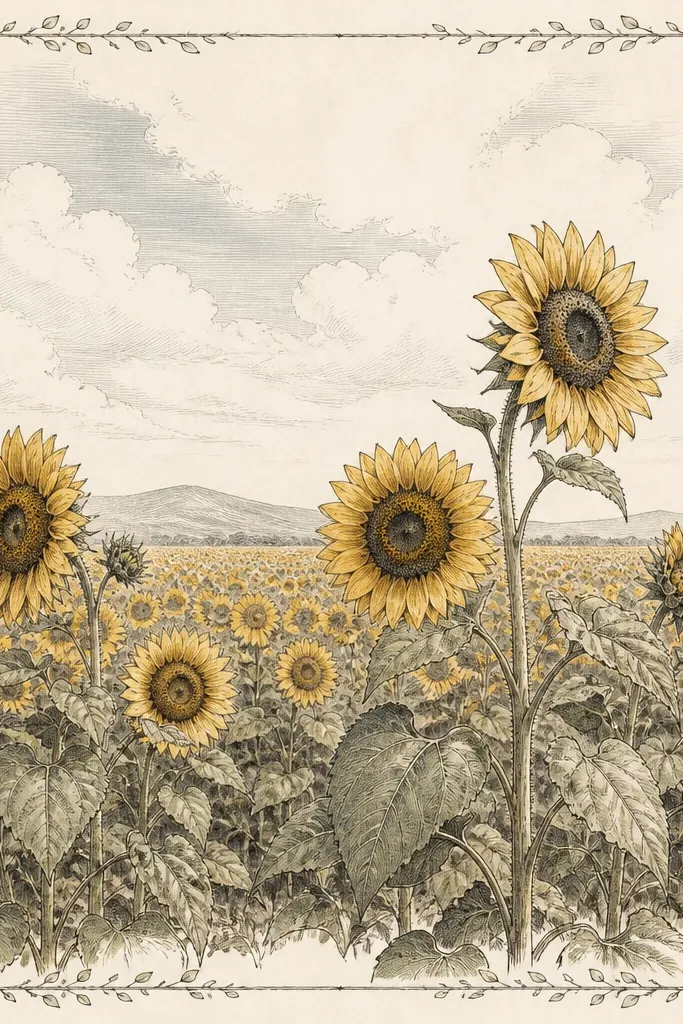
This look feels like a patterned illustration, not a landscape photo - which is exactly why it reads as aesthetic. The botanical border gives your piece a finished frame, while the midline horizon lets you add taller stems without losing depth. I keep the leaf drawings in a muted green and use pencil-to-ink linework for a soft, airy feel. It flatters small spaces because the composition fills the page without feeling heavy. The principle is line consistency: stems and grass strokes should share the same angle so the field looks unified.
Start by drawing a thin border all around with tiny leaf shapes - keep them small, about 1/4 inch each. Pencil your horizon at mid-height, then sketch 10 to 14 sunflowers and include stems that reach above the horizon. Ink the stems and leaves first with a fine liner, then add petal shapes in light yellow washes. Paint grass bands beneath the horizon in three steps, and finish by darkening only the bottom grass strokes so the stems stay the star.
Good to knowUse a 0.3 liner for leaves and a 1.0 brush for petals so line weight stays controlled.
Common mistakeDon't darken the entire grass; if everything is the same intensity, the horizon disappears.
14. Sunflower Field with Rolling Clouds Sky
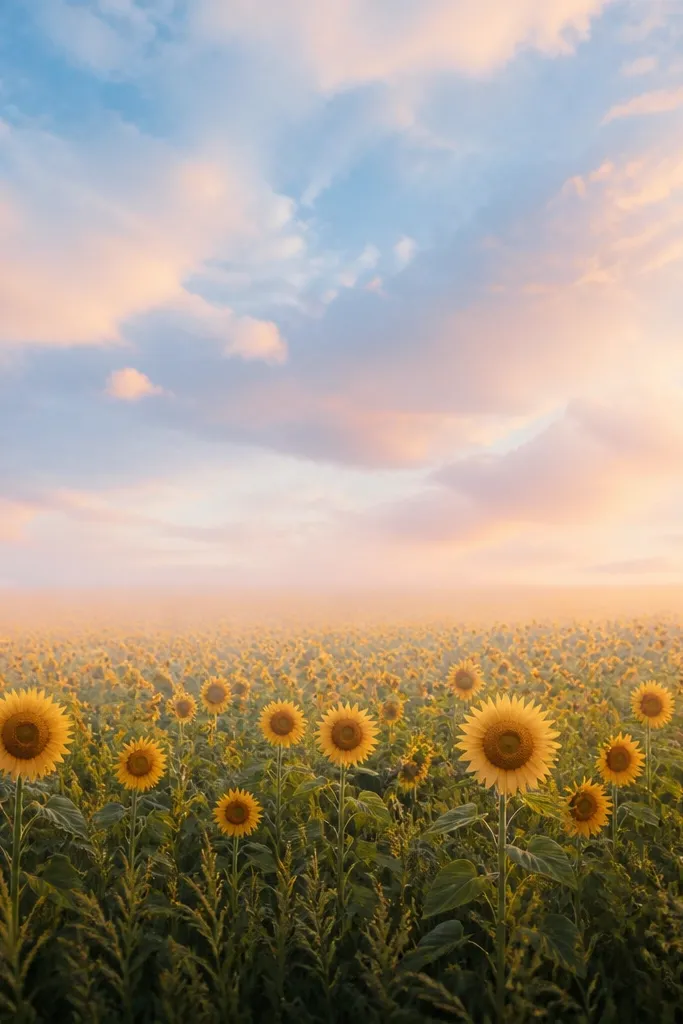
Cloudy sky makes the field look like it's moving even if you're drawing it flat. I use pale blue and peach washes, then blur the edges with a damp brush so the clouds look rolled, not drawn. The sunflower palette stays warm and simple, and I keep distant flowers lighter so the sky haze doesn't compete. It's flattering for anyone who likes dreamy, calm art that still has visual interest. The principle is sky-to-ground continuity: the softness in clouds should match the softness in distant flowers.
Start by washing the sky with pale blue, then add peach cloud bands that follow a gentle arc across the horizon. Blend the cloud edges with a damp brush until you get soft transitions. Then paint the distant grass with diluted olive-gray, leaving the horizon slightly lighter. Add mid sunflowers with medium yellow petals and fewer seed marks, then finish with foreground grass in darker green and add crisp seed spirals on the closest blooms.
Good to knowBefore blending clouds, blot your brush on a paper towel so you don't lift too much paint from the sky.
Common mistakeDon't draw cloud outlines; only soft edges should appear.
15. Sunflower Field with Sun Rays Between Flowers
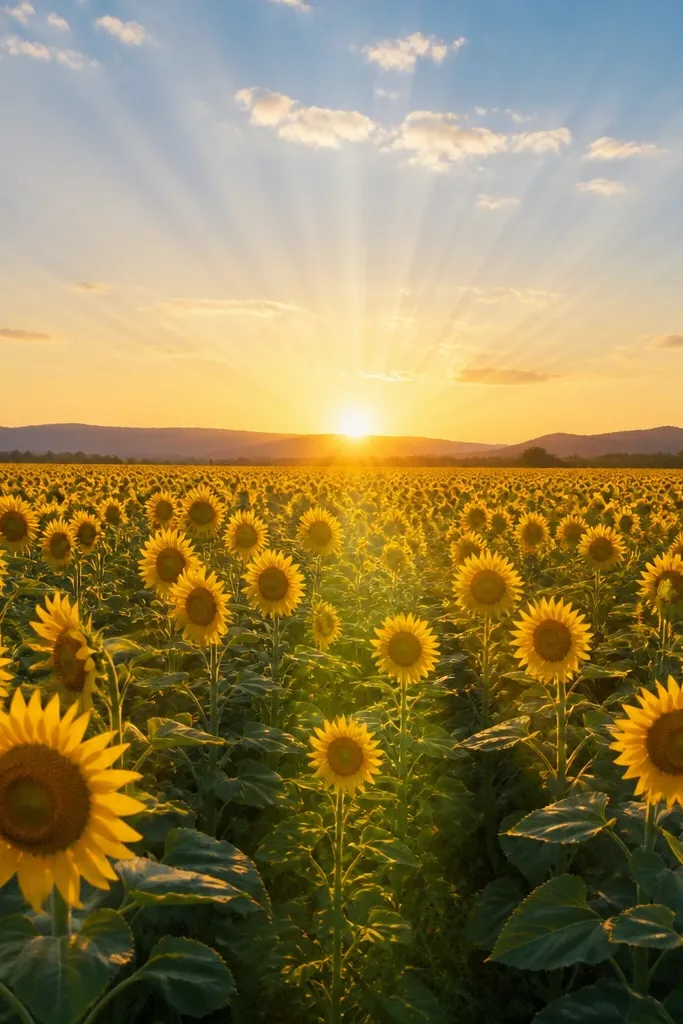
Sun rays add instant drama and keep the Sunflower Field Drawing aesthetic look from feeling like a simple row of flowers. I draw rays as thin, semi-transparent lines that fade as they reach the edges, so they don't look like a cartoon filter. This works especially well when you have one strong focal cluster in the center. It flatters both warm and cool outfits because the rays act like a light source. The principle is one light direction: everything brighter belongs to the same "sun" angle.
Start by sketching a focal cluster of 3 larger sunflowers near the center of your horizon. Paint the sky wash, then leave a slightly lighter area behind the focal cluster. Draw 10-14 thin sun ray lines from that center area, using diluted yellow that fades at the tips. Paint distant grass and mid flowers normally, then intensify foreground grass where the rays hit by adding a few lighter green strokes. Finish with seed details on the central sunflowers only so the rays stay the main effect.
Good to knowUse a ruler for the first two rays to set the angle, then freehand the rest.
Common mistakeDon't make the rays thick or fully opaque; that looks like clipart.
16. Sunflower Field with Torn Paper Sunlight Patch
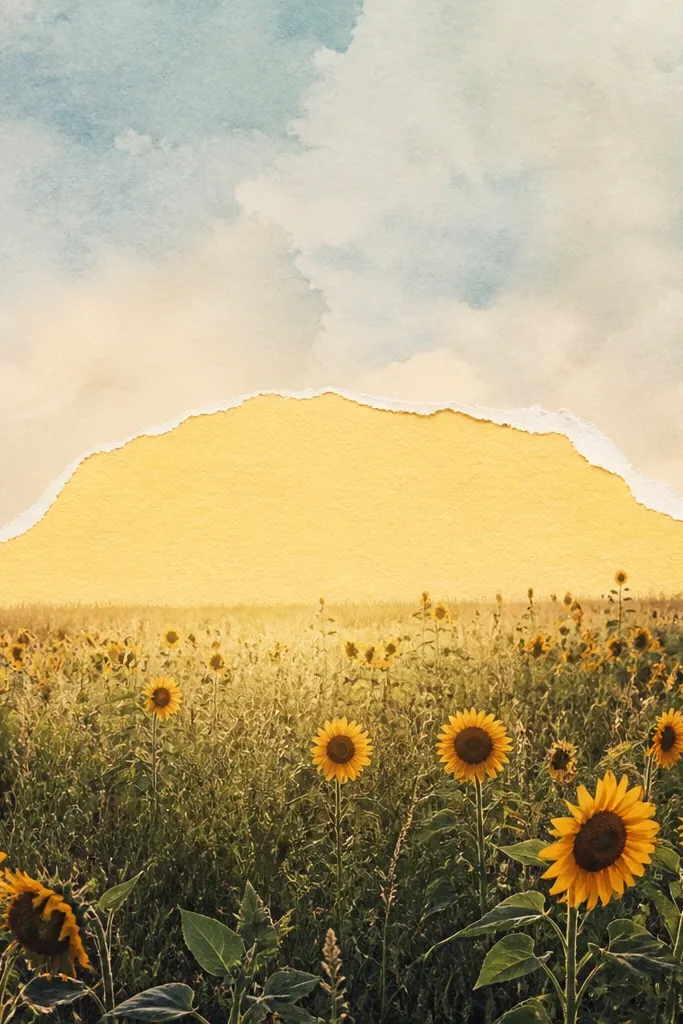
This is the easiest way I've found to fake a sunlight hotspot without complicated shading. The torn edge gives you a natural transition, and the paper texture makes the light feel grounded in the scene. I pair pale yellow "sunlight paper" with dark olive foreground grass so the contrast looks intentional, not accidental. It flatters people who like artsy mixed media and want a tactile finish. The principle is to place one physical light source and then paint around it.
Start by tearing a small rectangle or irregular shape from pale yellow paper and placing it near the horizon - about 2 to 3 inches wide on a standard 8x10 sheet. Glue it down and press firmly so edges stick. Paint the sky behind it with diluted blue and peach, then blend the surrounding area so it looks like light. Paint distant grass lighter around the patch, then add mid sunflowers with medium yellow petals. Finish with darker grass strokes in the foreground, keeping the brightest grass strokes closest to the torn paper hotspot.
Good to knowTint your pale yellow paper with a tiny dab of orange watercolor so it doesn't look flat against the sky.
Common mistakeDon't glue the patch too low; the scene stops feeling like sunlight on a field.
17. Sunflower Field with Metallic Gold Seed Highlights
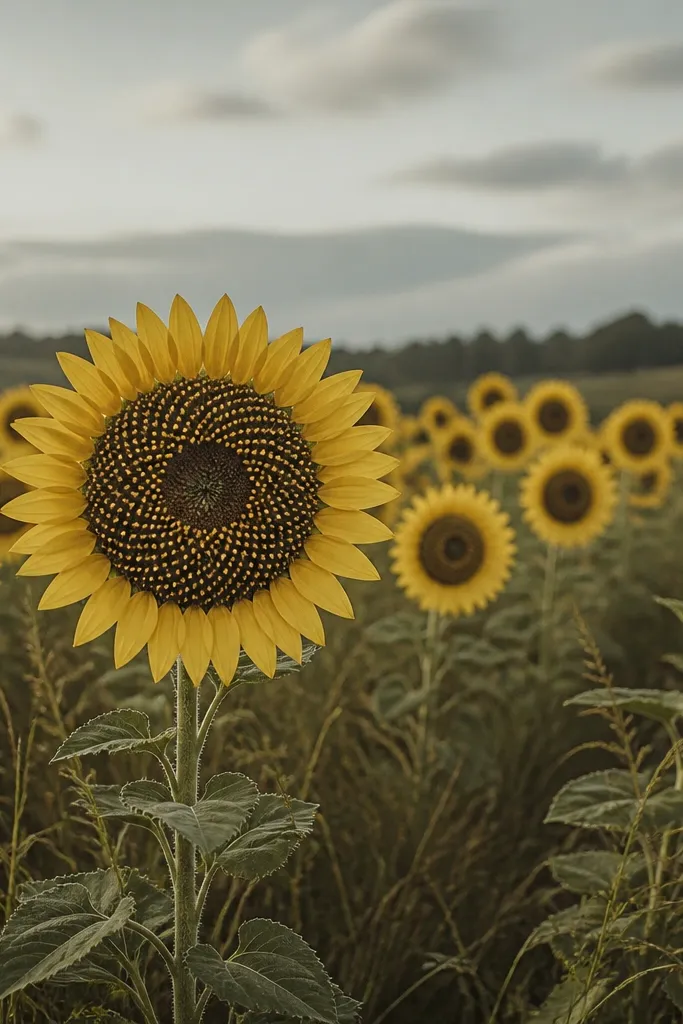
Metallic gold makes the seed heads look sunlit without turning the whole drawing shiny. I keep the metallic only on the seed spiral highlights and a few petal edge flecks, so it stays dreamy instead of flashy. The background stays matte with diluted greens, which helps the gold read like real light. This look flatters warm-toned rooms and also looks great under soft lamps because gold catches light gently. The principle is limited metallic use: gold goes on the focal details only.
Start by painting or drawing your field with matte colors first: lemon yellow petals, burnt umber seed centers, and olive-gray grasses in three bands. Let everything dry fully. Then add metallic gold dots along the seed spiral and a few tiny gold specks near the petal bases. Finally, deepen the foreground grass with darker olive so the gold doesn't get lost. If you want extra glow, add a very light glaze of yellow wash over the top half of the central sunflowers.
Good to knowUse a fine metal paint pen or a tiny liner brush for gold so the dots stay crisp.
Common mistakeDon't paint metallic gold on the sky; it ruins the softness.
18. Sunflower Field with Grid Transfer for Perfect Spacing
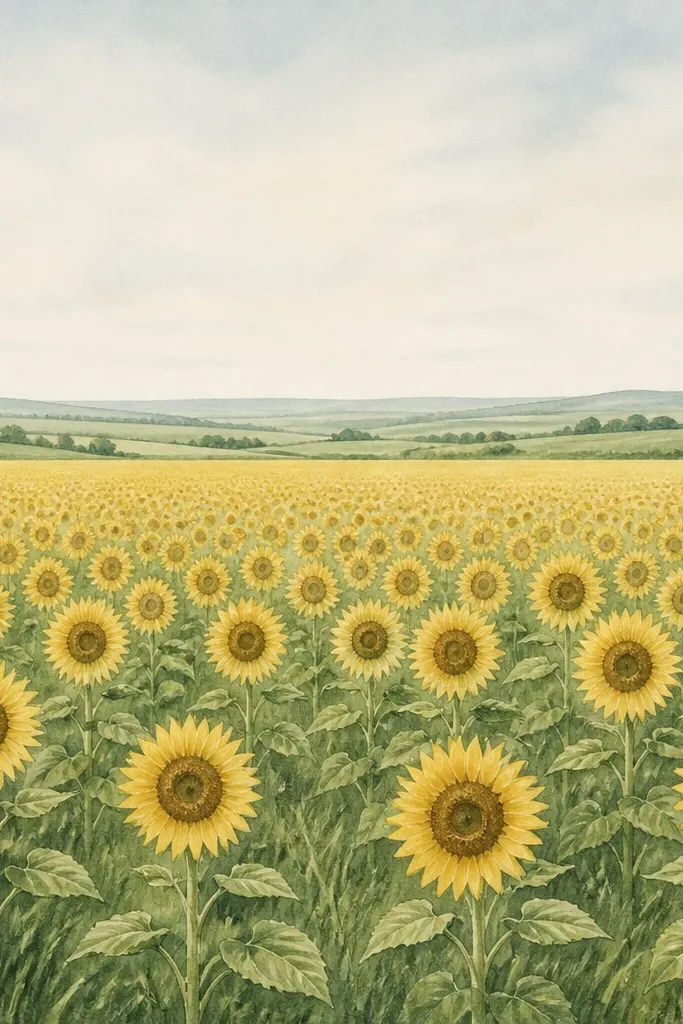
If your fields always look lopsided, grid transfer fixes it fast. I use it when I'm drawing on larger surfaces like tote panels or canvas boards where proportions matter. The aesthetic stays dreamy because the spacing looks intentional, even when your grass strokes are loose. It flatters anyone who wants a clean, balanced piece without feeling like a stencil. The principle is controlled geometry: the grid helps you scale flowers so depth reads naturally.
Start by drawing a simple grid on your reference (or on your paper if you're working from memory) with 1-inch squares. Then lightly sketch the same grid on your surface and transfer sunflower positions by matching key points - horizon, center circles, and tallest grass direction. Block in the sky wash first, then paint three grass bands using progressively darker green toward the bottom. Draw sunflowers with the same center circle size in the foreground and smaller circles in the distance. Finish with grass strokes that follow one direction and overlap the bottom edges of the closest flowers.
Good to knowErase the grid lines only after all paint is dry - it prevents smudging and keeps lines clean.
Common mistakeDon't draw every sunflower the same size; one larger cluster in front makes the depth believable.
19. Sunflower Field with Ink Dot Seed Texture
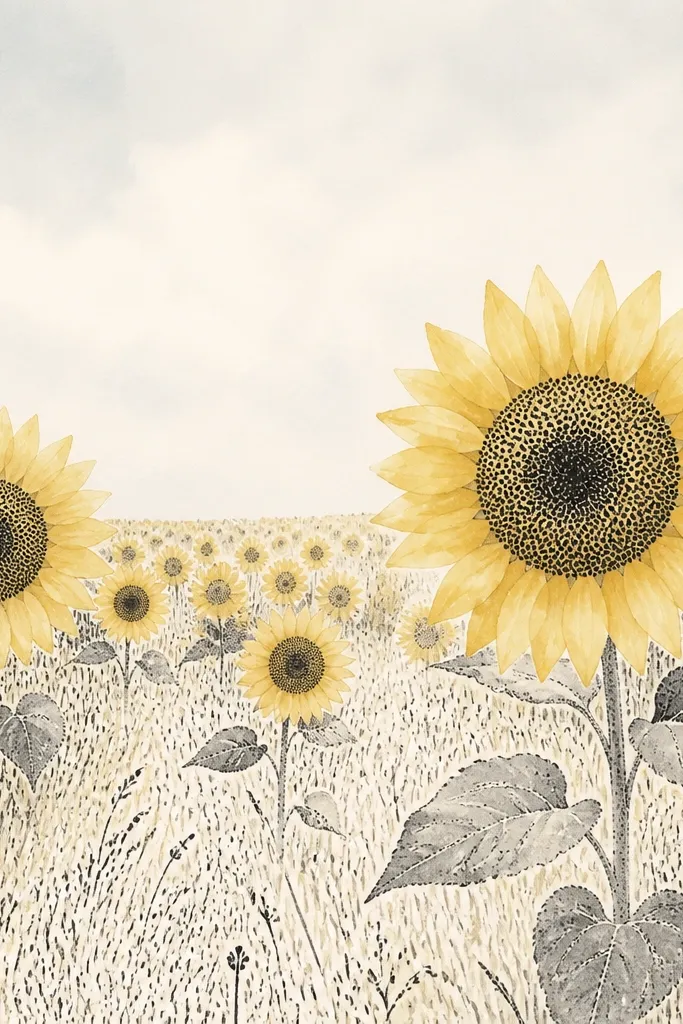
Dot texture makes seed heads look dimensional without needing complicated shading. I use it when I want the whole field to feel handcrafted and slightly vintage, like botanical sketches. The contrast between dotty seed centers and smooth petals creates a clean, dreamy look. It flatters people who like illustration style rather than painterly realism. The principle is texture contrast: busy center, calmer background.
Start with a horizon at 1/3 height and sketch sunflower centers as circles. Wash petals in pale yellow around each circle, leaving some paper white at the petal tips. For the seed heads, use a fine pen to dot in spiral rings, denser in the center and sparser near the edges. Paint grass in three bands, using ink strokes for the foreground and lighter wash for the distance. Add a few grass blades that cut across the bottom so the field feels layered.
Good to knowIf your dots look too heavy, switch to a thicker paper or use a finer pen tip for softer dots.
Common mistakeDon't outline every petal with ink; it turns into a coloring book look.
20. Sunflower Field with Green Ombre Grass Stems
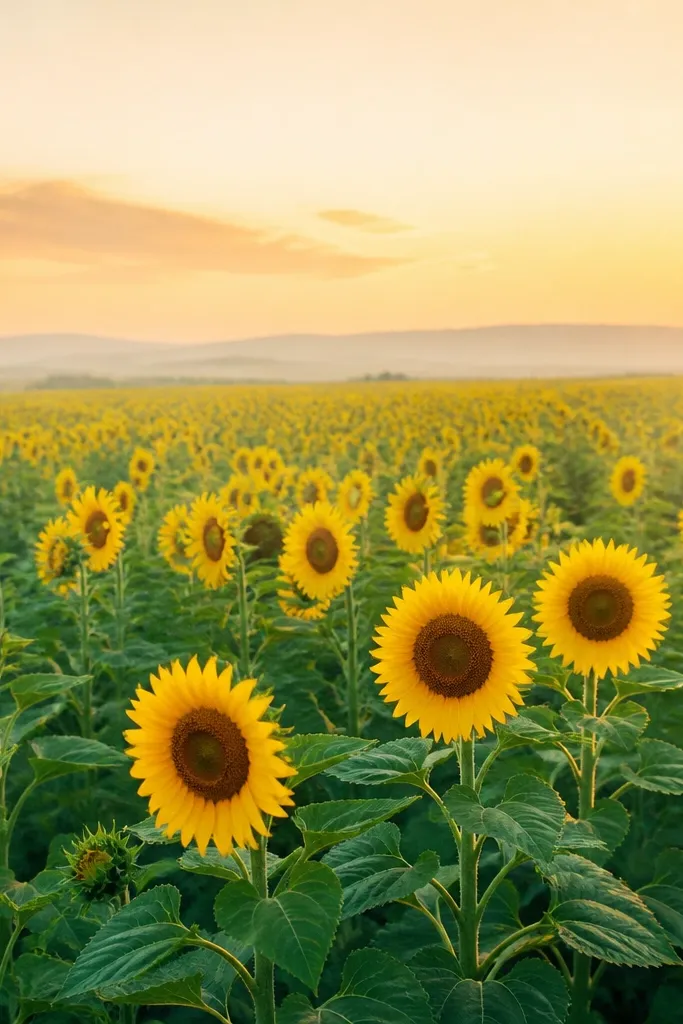
Ombre grass is what makes the field feel like it stretches. I paint the grass as repeated strokes that gradually lighten upward, so the horizon looks atmospheric instead of a hard line. The sunflower heads stay bright and crisp, which keeps the scene from turning washed out. This aesthetic flatters spring outfits because it looks fresh, not heavy. The principle is gradient direction: your paint value changes should follow the field depth.
Start by painting the sky with a warm gradient from pale peach near the horizon to light cream upward. Pencil your horizon and mark where the foreground grass band starts (about 2 inches from the bottom). Mix three greens: deep olive, medium sage, and very pale olive-gray. Paint grass with a stiff brush using short strokes, switching paint mixes as you move from bottom to horizon. Then draw sunflowers on top: add seed spirals and a few darker petal bases so the flowers anchor the softer grass.
Good to knowWipe your brush between green mixes so you don't muddy the ombre.
Common mistakeDon't blend greens on the page with circular motions; it smears the grass texture.
21. Sunflower Field with Soft Pastel Background Haze
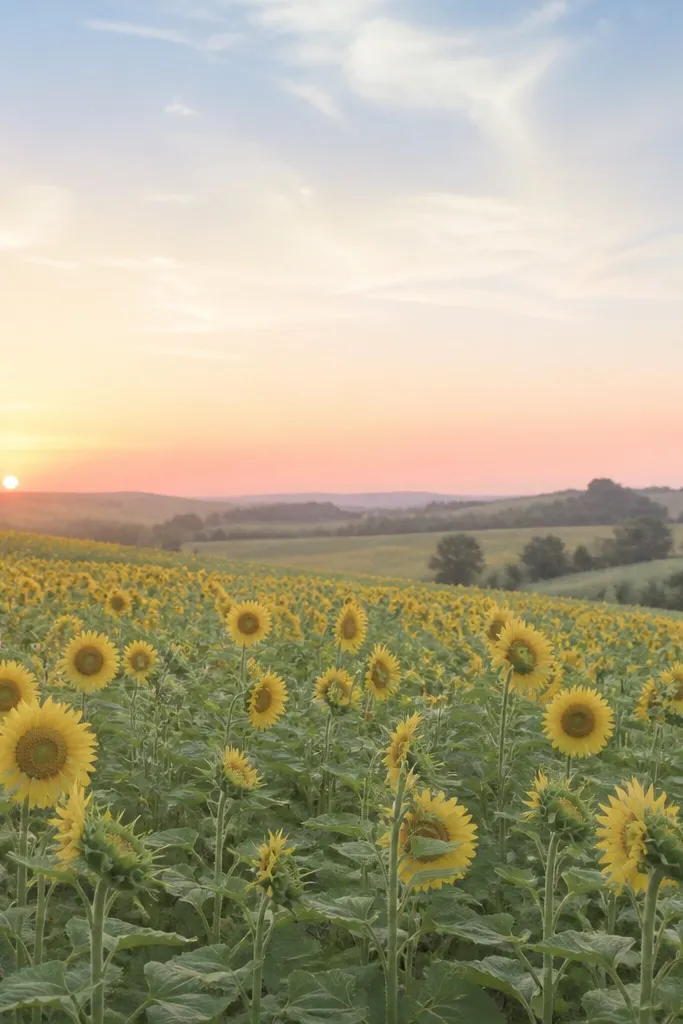
Pastel haze makes the whole drawing look like it's been filtered through warm light. I use light pink-peach around the horizon to create a glow, then keep greens soft so the field feels dreamy. The sunflower petals look best when they're slightly dusty yellow instead of bright school-bus yellow. This flatters anyone who likes gentle art for bedrooms, craft rooms, and calm corners. The principle is low saturation: soften everything except the seed spiral details.
Start by washing the sky with pale blue, then add a thin peach-pink haze band around the horizon. Let it dry until it's just barely tacky, then add distant grass in a very pale green wash. Draw sunflowers in mid-ground with muted yellow petals, and outline only the seed head circle lightly. For the foreground, paint grass strokes a touch darker and add seed spirals with a fine pen for crisp detail. Finish by adding 2-3 darker petal shadows on the closest blooms to keep the center from looking flat.
Good to knowUse a tissue to lift a little paint from the haze band for extra glow.
Common mistakeDon't add heavy outlines to the whole field; it kills the pastel softness.
22. Sunflower Field with Fabric Paint Stippling Sky
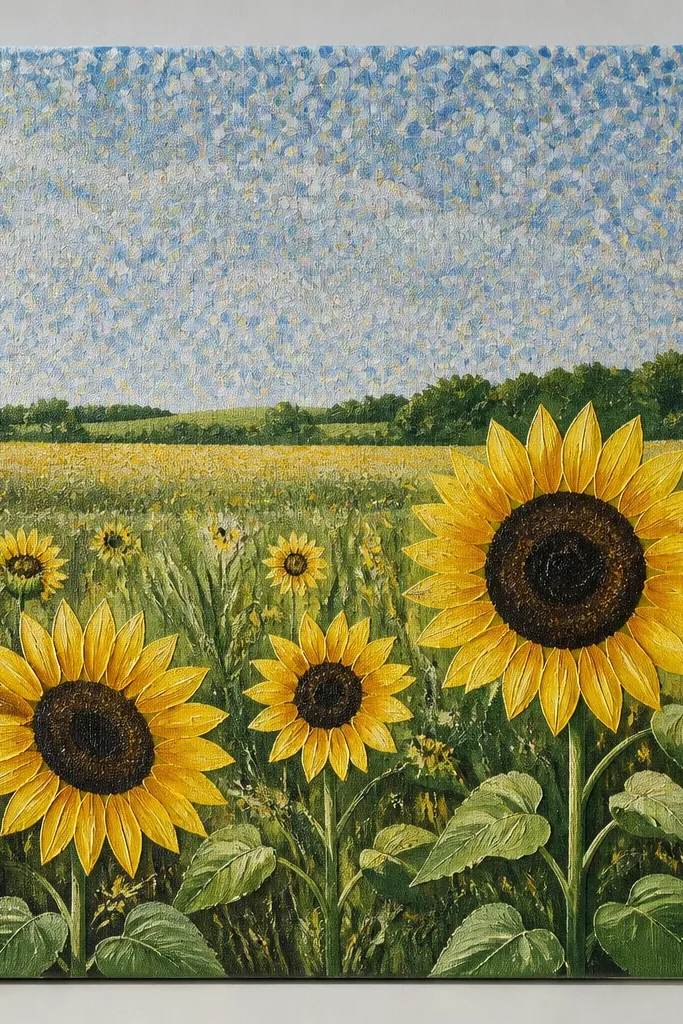
Stippling the sky makes it look textured, like light particles in the air. I do this when I'm drawing on canvas or fabric because the texture holds paint in tiny dots and looks natural. The sunflowers stay crisp and readable, while the sky stays interesting without needing cloud shapes. It flatters people who like a craft-meets-art vibe - it looks handmade and cozy. The principle is texture separation: dotty sky, smoother grass, crisp focal flowers.
Start by sketching your horizon and sunflower centers lightly. Paint the sky with a diluted base wash, then use a stippling brush or the end of a makeup sponge to add small dots in slightly darker blue and pale cream. Let it dry, then paint distant grass in pale olive-gray and mid grass in medium olive. Add sunflowers on top with bright yellow petals and warm brown seed heads, then finish with darker foreground grass strokes. Finally, add a few seed spiral lines on the nearest flowers only so your eyes land where you want them.
Good to knowStipple in small clusters near the horizon, not across the whole sky, for a more believable glow.
Common mistakeDon't overdo the sky dots; too many makes it look like a random speckle filter.
23. Sunflower Field with One Big Foreground Bloom
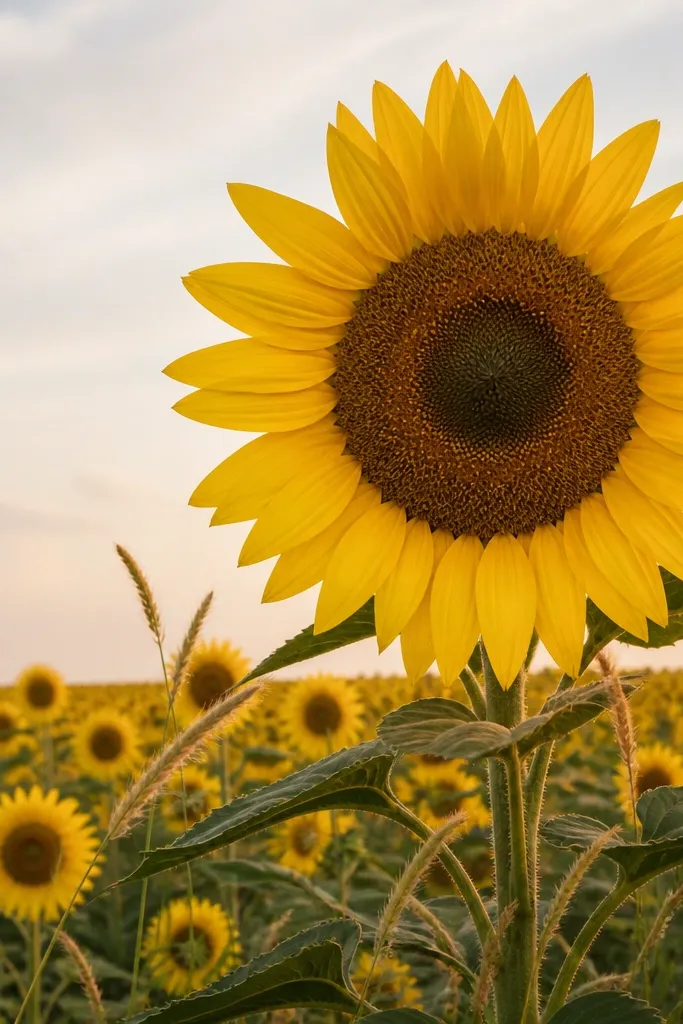
A single oversized foreground bloom is what makes the sunflower field drawing aesthetic look feel personal, like you're standing close to the plants. I draw this when I want the piece to work as wall art because the focal point is obvious even from across the room. The palette stays consistent: bright yellow petals, dark brown seed head, and greens that lighten toward the horizon. It flatters people who like portraits of nature - it's more intimate than a full even spread. The principle is scale contrast: one big flower plus smaller receding ones creates depth instantly.
Start by sketching one large sunflower head so its center sits about 1 inch above your foreground grass band. Add a smaller cluster of 4 to 6 sunflowers behind it, then a few tiny ones near the horizon. Paint sky wash first, then distant grass in pale olive-gray. Paint the mid flowers next, then go back and paint the big foreground petals last so they look brightest. Finish by adding dark foreground grass strokes that partially cover the stem base and a few petal edge shadows for depth.
Good to knowPut one seed highlight dot at the top-left of the big seed head so the light direction feels real.
Common mistakeDon't space small flowers too evenly; the uneven receding size is what makes it feel like a field.
24. Sunflower Field with Hanging Vines and Wild Leaves
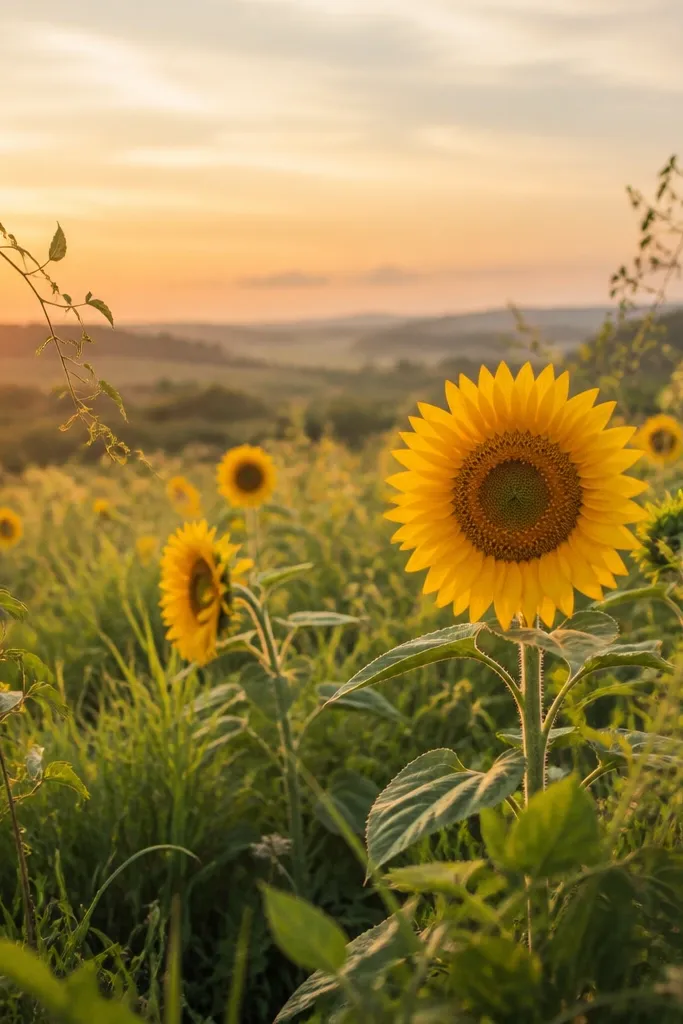
Adding vines makes the field feel lived-in, like it grew around other plants. I keep vines thin and slightly darker than the grass so they don't compete with the sunflowers. The leaves should be irregular - small lobes and uneven edges - so they look wild, not decorative. This aesthetic flatters people who like garden energy rather than neat landscape art. The principle is framing: vines draw your eyes toward the horizon and the sunflower cluster.
Start by sketching the horizon and placing sunflowers in the mid-ground. Add vine lines from the left and right edges that curve inward, then add a few wild leaf shapes along those vines. Paint the sky wash and distant grass first, then paint sunflowers with consistent yellow petals and brown seed spirals. For the foreground, add grass strokes and tuck a few vine leaves behind the foreground grass so it feels layered. Finish by darkening 2-3 vine leaves with a slightly deeper green so they read clearly against the haze.
Good to knowUse a fine brush for vines and a dry brush for grass so line work stays delicate.
Common mistakeDon't add too many vines; 3 to 5 leaf clusters is enough for the garden feel.
25. Sunflower Field with Sepia Ink and Soft Color Wash
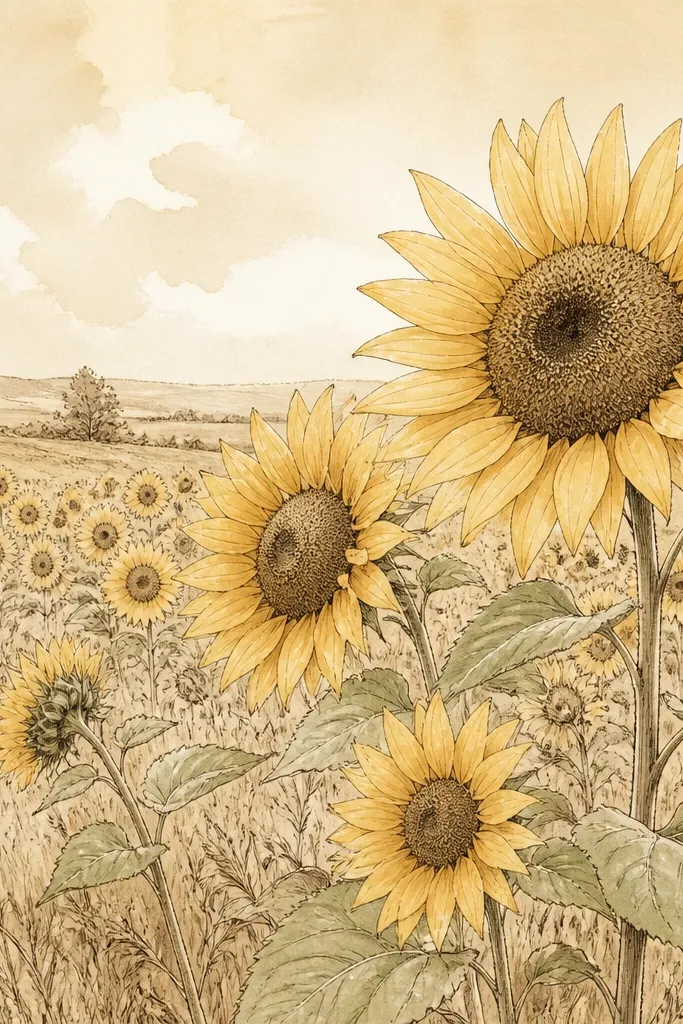
Sepia ink gives you that old-photo warmth without making the sunflowers look dirty. I use sepia for grass strokes and seed spiral lines, then add soft color washes for petals and distant greens. The result is dreamy and calm - it looks like late afternoon in a photograph. It's flattering for anyone who likes warm, vintage decor. The principle is limiting your ink color: sepia stays consistent so the scene feels cohesive.
Start by sketching the horizon and sunflower centers with pencil. Draw grass and seed spiral lines using sepia ink, keeping the foreground denser and darker. Then wash petals with light yellow watercolor and add a soft green wash for mid-ground leaves. Paint distant grass with very diluted pale green so it fades toward the horizon. Finish by adding a few darker sepia grass strokes in the bottom band to anchor the composition.
Good to knowLet ink dry fully before adding washes so the sepia doesn't bleed into the sky.
Common mistakeDon't use black ink for grass; it makes the scene look harsh and less dreamy.